Karatoyama Ritual Sumo
Japanese name:唐戸山神事相撲
📅 Wed, Sep 23, 2026
About this event
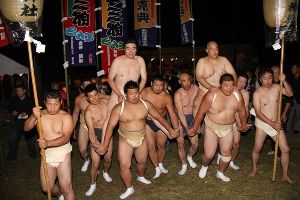
Known for its unique rules of 'no water, no salt, no waiting,' Karatoyama Ritual Sumo is held on September 25, the death anniversary of Iwatsukuwake-no-Mikoto, a prince of the 11th Emperor Suinin and the enshrined deity of Hakui Shrine. This ritual is said to have originated when powerful wrestlers from across the Hokuriku region gathered to wrestle and comfort the divine spirit in memory of the benevolence of Iwatsukuwake-no-Mikoto, who once governed the region with benevolent rule, trained local youths through sumo, and was deeply respected by the residents. Following the annual festival at Hakui Shrine, a sumo festival and an appointment ceremony presenting a plain wood gunbai (referee fan) to the head referee (tategyoji) are held. Afterwards, sponsored sumo bouts take place at Karatoyama, and after an intermission (nakairi), bonfires (kagaribi) are lit on the 4 sides of the ring, and the ritual sumo proceeds according to the ancient format of outdoor sumo (nozumo). The wrestler who earns the rank of Ozeki in the final match is presented with the Godaisho (imperial edict scroll), a large heihaku of white silk, and a tall paper lantern (takahari chochin) at the Hakui Shrine worship hall, before heading to his hometown where supporters await. This ritual is also famous as 'Shusse Sumo' (advancement sumo), where the Ozeki may be granted the title of 'Oyakata' (master), reflecting its distinctiveness.
Source website (Japanese) ↗Venue
Karatoyama Sumo Ring
Ki, Minamichuomachi, Hakui, Ishikawa 925-0053
Open in Google Maps ↗